🚨 “Hustle Culture Is Broken — Gen Z Knows It”
✍️ “Ditch the Grind. This Journaling System Actually Works.”
3/15/20263 min read
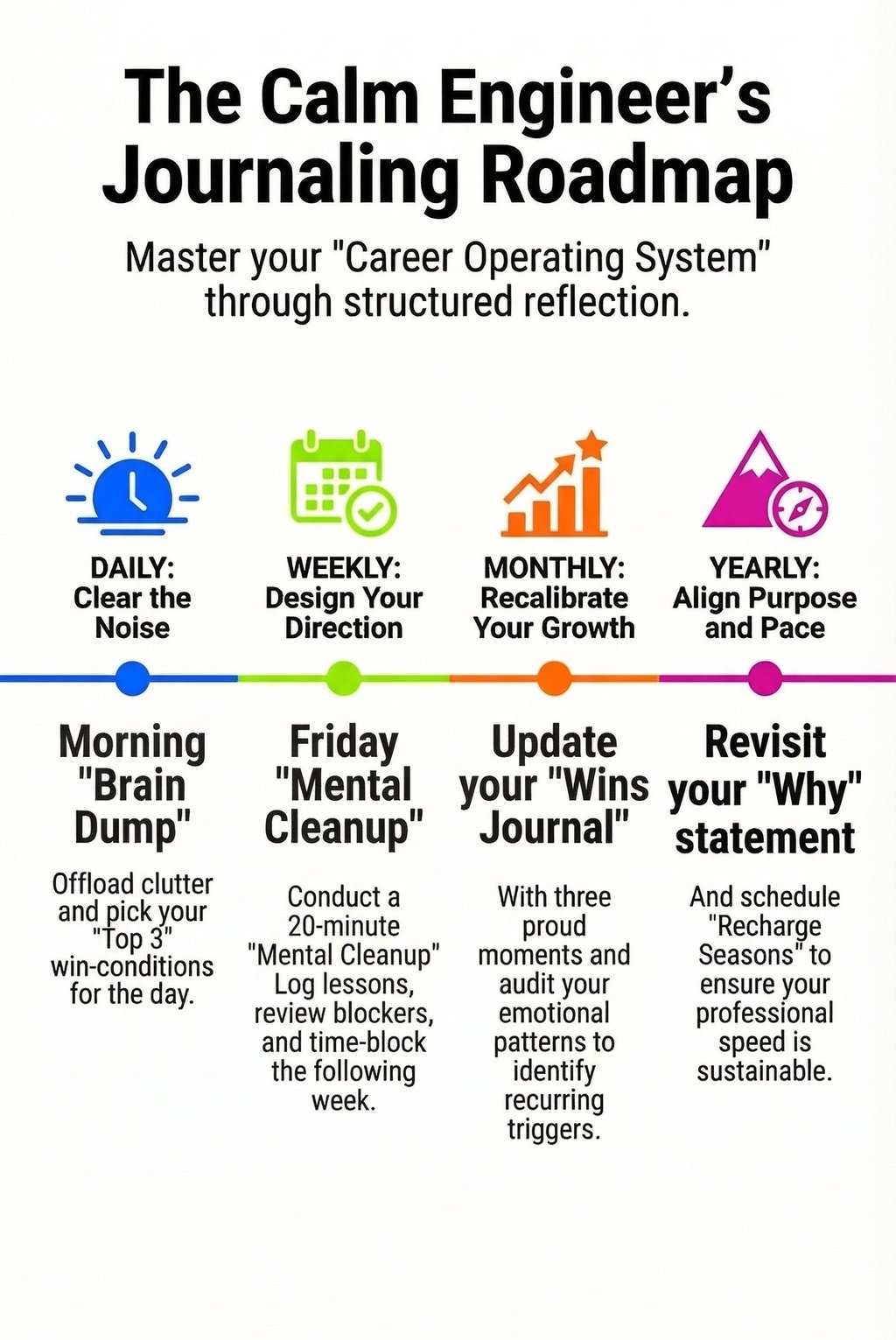
Imagine this: You’re constantly scrolling, coding, studying, and grinding, but at the end of the month, you feel like you haven’t actually moved forward. Sound familiar? Many Gen Z engineering students and early-career professionals experience this exact moment of overwhelming panic. The good news? A simple journaling habit can completely change your trajectory and clear the chaos.
1. The Problem Today’s Gen Z engineers face massive challenges like:
Constant information overload from tech trends and social media
Intense competition and comparison anxiety (especially on platforms like LinkedIn)
Unclear career direction and the pressure to “figure it all out right now”
When you try to keep all your tasks, goals, and anxieties floating around in your head, it leads to overthinking, decision fatigue, and eventual burnout. Most young professionals lack the organizational systems to make space for what actually matters.
2. The Insight Successful engineers don't rely purely on motivation or memory; they rely on systems. By building a "Career Operating System" through structured journaling, you can track your growth, manage your energy, and turn confusion into clarity. Journaling isn't about writing a diary; it's about creating a personal dashboard to debug your mindset.
3. The Main Content: Your Journaling Blueprint
Step 1: The Daily Journal (The Anchor) Your daily journal is for clearing mental clutter and setting immediate intentions.
How to do it: Use the "Rule of 3." Every morning, write down the top 3 things that will make the day a win. In the evening, do a quick "Mental Download" or Evening Reflection to log what went well and what you learned.
Example:
AM: 1. Finish the API code. 2. Read 10 pages of my book. 3. Hit the gym.
PM: Finished the API, but got distracted by TikTok and missed my reading. Tomorrow, I will put my phone in another room while working.
Step 2: The Weekly Journal (The Cleanup) The weekly journal helps you reset your priorities and reflect without shame.
How to do it: Schedule a 20-minute "Mental Cleanup" every Friday or Sunday. Use the "Three-List Method" to identify what gave you energy, what drained you, and what you are curious about.
Example:
Energized me: Pair programming with my senior.
Drained me: Two hours of unstructured meetings.
Curious about: Learning generative AI basics next week.
Step 3: The Monthly Journal (The Confidence Builder) Monthly journaling is about recognizing your progress and stepping off the comparison treadmill.
How to do it: Create a "Monthly Wins Journal." At the end of the month, write down three things you are proud of—no matter how small.
Example: 1. Resolved 5 major bugs. 2. Handled a tough team disagreement calmly. 3. Stuck to my daily focus ritual for 3 weeks straight.
Step 4: The Yearly/Quarterly Journal (The Compass) This is where you look at the big picture to ensure you are designing your career with direction, not just drifting.
How to do it: Set up a 12-Month Feedback Loop and do a quarterly purpose reflection. Ask yourself: What motivates me besides results? Who do I want to impact through my work?.
Example: I realized I am more energized by product management and customer interaction than backend coding. I will pivot my learning goals this year toward systems thinking and user empathy.
4. Real Story Akhil, a fresh engineering grad, struggled with watching his peers announce new jobs online. It drained his confidence. To combat this, he started a weekly journal to track his own wins—from understanding a complex concept to completing a Python side project. After two months, his list surprised him. By measuring his own growth, he no longer needed social media to validate his journey.
5. Quick Takeaways Key Lessons:
Daily journaling clears mental fog and sets your focus.
Weekly reflection helps you debug your habits and pivot.
Monthly and yearly journaling build long-term confidence and keep your career aligned with your true purpose.
6. Action Challenge Try this 3-day challenge to start your Career OS:
Day 1: Do a 5-minute morning "brain dump"—write down everything stressing you out, then pick just 3 tasks to focus on.
Day 2: At the end of the day, write down one thing you learned and one mistake you made (without judging yourself).
Day 3: Set aside 10 minutes to write down your "Why"—what kind of problems are you driven to solve in your career?
7. Closing Message Engineering your career is not just about mastering new frameworks or hustling harder. It is about developing the calm mindset and internal systems that help you grow sustainably over time. Clarity doesn’t arrive overnight; it emerges slowly from quiet, consistent reflection.
8. Level Up With The Calm Engineer Many of these powerful journaling strategies and mindset shifts are explored in much greater detail in the book The Calm Engineer. If you are a student or a junior professional wanting to transition from feeling overwhelmed to staying organized, focused, and ahead of the game, I highly encourage you to read it. Grab your copy of The Calm Engineer to start building a career with calmness at its core!